Egypt vs Iran at the World Cup: A Century of History on One Pitch
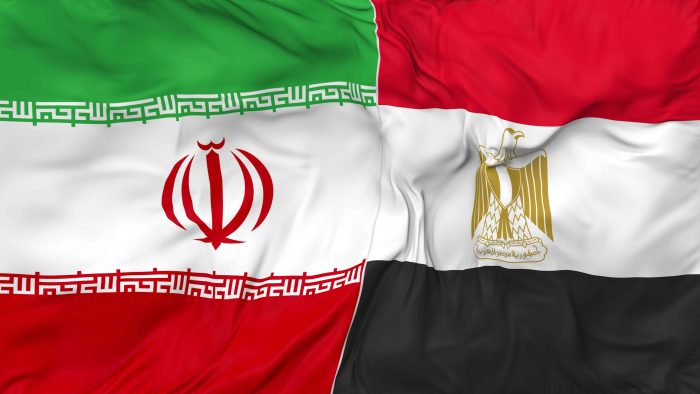
Wired.me – SEATTLE, For these countries, football is more than a game. As the two nations meet in a decisive World Cup clash, we explore why this fixture carries the weight of history, identity and collective pride.
Images of Egyptians across the world have been pouring in since the country’s first historic win against New Zealand at the World Cup. The Pharaohs broke the 92-year-long drought that has plagued them since 1934, when they became the first African country to enter the tournament. No team since was able to qualify, so much so that failure to do so had become a running joke.
But on 22 June, led by Liverpool icon Mohamed Salah, Egypt achieved the seemingly impossible. And as soon as the whistle blew on the Vancouver stadium pitch, fans around the world exulted in joy, while dancing to Hamaki’s “Oum el Donia” (“Mother of the world” – one of Egypt’s many nicknames). The Cairo fan zone was packed with fans, from kids bursting with happiness to adults crying with joy. For one night, nothing else mattered.
To anyone on the outside watching the celebrations, their scale might appear excessive, but that completely misses the point of what unfolded that night – and what is about to be repeated on 27 June during the Egypt vs Iran World Cup match.
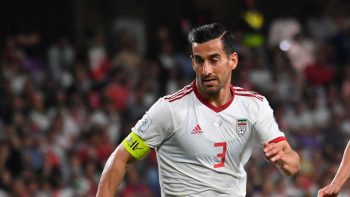
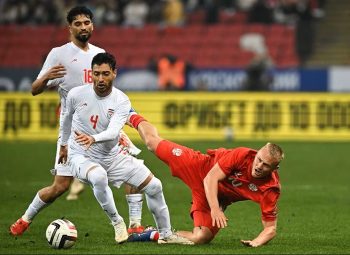
This fixture has been announced as one of the most highly anticipated of the final day of the group stages. Two countries from the MENA region are facing off. Two countries passionate about football. Two countries that consider this sport not just a game but a marker of identity and a symbol of a shared national history.
In Egypt, sports played a crucial role in spreading anticolonialist ideas among the population. Its clubs acted as meeting places where people could organise politically. One such example is Al Ahly, founded in Cairo in 1907 when the country was under British occupation. There, Egyptian students gathered to discuss the future of their country.
In Iran, football shaped a national identity, a shared cultural space that transcended ethnic, class and political divisions. In both examples, it allowed people to write their own narratives. “Stadiums are often used as places where people can freely express their social demands, frustrations and hopes,” adds Saïd El Abadi, journalist and author of The History of African Football.
“On top of the footballing heritage of both countries, this match is make or break for qualification to the round of 16,” he continues. It’s a high stakes match. Egypt must win to secure top spot in their group – a first for the nation. For Iran, there is something to prove. Against the backdrop of the US-Iran war and the uneasy extended ceasefire, the team is only being granted entry to the US on match days, and ordered to leave immediately after.
“Team Melli is playing in this competition under extreme conditions. Due to political restrictions, they are based in Mexico and have to cross the US border to play. Despite the fatigue and the absence of some coaching staff, the Iranian players are showing a resilience that commands respect,” says El Abadi.
Of all the sports, football inspires the strongest emotion. “It is a universal sport. Although it was created in England, today it belongs to the whole world,” says Fatma Bouvet de la Maisonneuve, psychiatrist at Hôpital Sainte-Anne in Paris. El Abadi further describes it as “an open-air laboratory for human psychology. People have always talked about this sport being the ‘opium of the people’. I reject this expression because it is negative. Football is a catalyst for emotions. We experience tension, joy, failure, liberation and sadness, all at once.”
“It’s almost Shakespearean,” jokes El Abadi. Maisonneuve explains this constant feeling of being on a roller-coaster ride, saying that “we invest part of ourselves, our hopes and our pride in it. The teams become an extension of the ‘self’. In fact, we say ‘we’ve won’, as if we were out on the pitch with them. The team becomes an embodiment of our identity.”
Defeats and victories are therefore experienced very deeply. This is particularly true in times of political and economic uncertainty. National teams serve as a form of collective escape and emotional release. “It becomes more than just a form of entertainment; it provides a much-needed breath of fresh air. During a match, political divisions and social or economic problems fade into the background as people come together for a shared goal. Politicians have understood this for centuries,” El Abadi explains. “This is the famous Juvénal’s concept of ‘bread and circuses’, which has its origins in Roman antiquity but has been reinterpreted by modern psychology.”
But the lingering feeling is, above all, one of pride. Especially in a competition as big as the World Cup “It’s a tournament we’ve often seen the ‘others’ take part in. For a long time, securing a place in the African or Asian qualifying zones was an uphill struggle. Taking part in the World Cup means escaping the clutches of media obscurity,” he observes.
The 2026 edition of the World Cup saw 15 countries from Africa and the MENA region qualify – a first in the history of the tournament. Some of these nations participated in their first-ever World Cup. Not only have they competed, they have also taken on established teams. Cape Verde drew with Spain. The same goes for Egypt and Belgium, and for Morocco and Brazil. Maisonneuve says that this feeling of pride transcends the concept of nationhood and patriotism.
“There is a clear South versus North dynamic. When Iran or Morocco stands their ground, we all suddenly feel a sense of pride.” It is this ‘we’ that is interesting. It is no longer confined to national borders, but rather encompasses a global region. This ‘we’ refers to marginalised people, whether they are from Senegal, Iran or Egypt. There is immense cultural pride in challenging the established hierarchy. When Cameroon beat Argentina in 1990, when Senegal beat France in 2002, and when Saudi Arabia beat Argentina and Morocco knocked out Spain and Portugal in 2022 – these weren’t just football matches won. They also proved that African and MENA countries are on a par with the rest of the world.”