Who is Ster Habibzadeh: Coach of OH Leuven Women’s
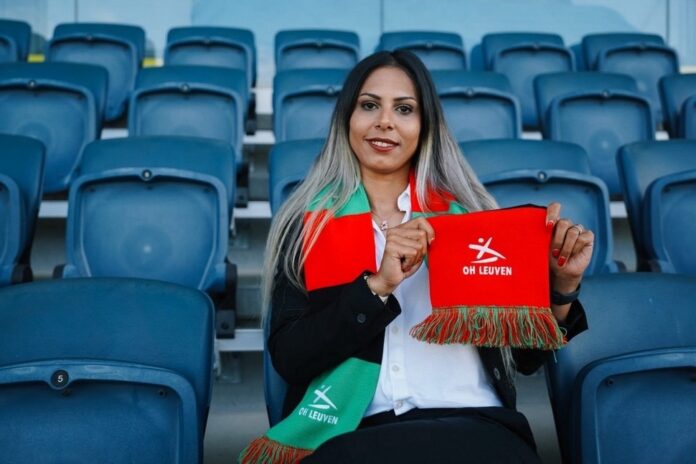
Thefootballweek.com – LEUVEN, Leadership in football is rarely shaped by a single role or a single country. It is built through resilience, cultural understanding, and the ability to develop people as consistently as teams. Few careers reflect that journey more clearly than Ster Habibzadeh’s.
Born in Tehran and a former Iranian international, Ster Habibzadeh has built an impressive coaching career across Europe. Today, she serves as Head Coach of Belgian champions OH Leuven after previously leading the development of Patro Eisden’s women’s programme and contributing as a coach educator with Voetbal Vlaanderen. Having experienced football from multiple cultural and professional perspectives, Habibzadeh combines high performance coaching with a long term vision for player development, leadership, and the continued growth of women’s football.
You were born in Tehran, represented Iran internationally as a player, and have since built your coaching career in Europe. Looking back, how has that journey shaped your identity as a leader and coach?
I had to work extremely hard to achieve every milestone throughout my journey. Discipline became non negotiable, but so did resilience. I quickly learned that success requires a mindset that refuses to give up, even when progress is slow or setbacks occur.
Equally important was surrounding myself with people who believed in me and stood by me during both the difficult moments and the successful ones. Those experiences continue to shape my coaching philosophy today. I expect commitment, resilience, and accountability from my players, while also encouraging them to support one another as a team.
Having experienced football in both Iran and Europe, what differences have most influenced your understanding of player development, leadership, and opportunity within the women’s game?
The biggest difference lies in the level of infrastructure and professional support available to women’s football. In Europe, facilities, coaching structures, and performance environments are generally more advanced, allowing players to develop in a highly professional setting.
From a football perspective, I see different strengths in each environment. Players in Iran often possess outstanding technical ability, while the European game places greater emphasis on physical performance and athleticism. Another interesting difference is the connection with supporters. Women’s football in Iran regularly attracts passionate and full stadiums, while many European clubs are still building that level of engagement.
Experiencing both environments has taught me that there is no single model for success. Every football culture offers valuable lessons.
You have worked as a player, coach, academy leader, manager, and now head coach at the highest level in Belgium. How has each role changed the way you view football organisations and long term success?
Every role has broadened my perspective on what success truly requires. As my responsibilities increased, I realised that sustainable success is never achieved overnight.
One of the biggest lessons has been understanding the importance of patience, trust, and perseverance. Football organisations must be willing to give both people and projects the time to develop. Long term success is built by believing in the process rather than constantly expecting immediate results.
At Patro Eisden, you were not only coaching but also heavily involved in building and leading the women’s programme. What did that experience teach you about creating sustainable structures in women’s football?
One of the biggest lessons was understanding that women’s football should not be measured against the men’s game. It is a unique sport with its own identity, strengths, and enormous potential.
Sustainable growth comes from respecting that identity while continuing to professionalise the game at the right pace. As standards improve, investment naturally follows, creating stronger infrastructures, greater visibility, and more opportunities for future generations. Long term success is built through patience, strategic planning, and continuous development rather than short term expectations.
Many coaches focus primarily on tactics and performance. You have worked extensively in development environments. What qualities do you believe separate players who fulfil their potential from those who fall short?
Talent alone is rarely enough. The players who ultimately fulfil their potential combine natural ability with an exceptional professional mentality.
From a very young age, they make choices that support their long term ambitions. While many of their peers are focused on short term enjoyment, they consistently prioritise training, recovery, nutrition, and self improvement. Those daily decisions, repeated over many years, are often what separates elite players from talented players who never quite reach the highest level.
You are fluent in multiple languages and have operated across different cultures throughout your career. How important is cultural intelligence in modern coaching and leadership?
Modern football brings together people from many different cultures, backgrounds, and experiences. Whether you are working with players, coaches, staff, or supporters, cultural awareness has become an essential leadership skill.
It is important to understand and respect individual differences while maintaining the core values and identity of the club. Finding that balance creates an environment where people feel respected, connected, and able to perform at their best.
Women’s football in Belgium has made significant progress in recent years. From your perspective, what has driven that growth and what challenges still remain?
The professionalisation of the Belgian women’s game has been the biggest driver of progress. The Belgian Football Association, together with clubs such as OH Leuven, Club Brugge, Anderlecht, Standard Liège, and Genk, have invested significantly in developing their women’s programmes.
Clubs have strengthened their academies, expanded their professional staff, and created environments where players and coaches can increasingly work on a full time basis. Those investments have contributed to higher standards across the league, greater competitiveness in European competitions, and the continued development of the Red Flames.
The challenge now is to maintain that momentum by continuing to invest in infrastructure, player development, and long term sustainability.
You have recently taken over as head coach of reigning Belgian champions OH Leuven. What attracted you to this opportunity and what ambitions do you have for the next phase of the club’s development?
OH Leuven represents one of the most professional and ambitious environments in Belgian women’s football. The club has invested significantly in its women’s programme, has an outstanding academy, and consistently demonstrates the courage to trust and develop young players.
Those values strongly reflect my own philosophy. My objective is to build on the outstanding work that has already been done while introducing my own ideas alongside my staff. We want to continue competing for domestic success, become increasingly competitive in Europe, and ensure that talented academy players continue to see a genuine pathway into the first team.
As a coach educator with Voetbal Vlaanderen, you are helping shape the next generation of coaches. What do you believe modern coaches need to master today that was not required ten years ago?
Modern coaches must understand that their role extends far beyond the ninety minutes on match day.
Technology, performance analysis, and data have become essential tools in decision making, allowing coaches to make more informed and evidence based choices. At the same time, today’s players often have different expectations, motivations, and ways of learning than previous generations.
More than ever, successful coaches need the ability to adapt, communicate effectively, and build genuine relationships with people.
You have built your career across different countries, cultures, and roles within football. When people look at your journey, what do you hope they understand about leadership, resilience, and the opportunities available in women’s football?
I hope people understand that passion alone is never enough. Passion must be matched by discipline, resilience, and an unwavering willingness to work hard every single day.
Football has given me incredible opportunities, but none of them arrived overnight. They were the result of years of commitment, setbacks, sacrifices, and continuous learning. No matter how difficult the journey became, I never lost sight of where I wanted to go.
Even today, I continue to chase new goals with the same determination and commitment that shaped my journey from the very beginning.